How to Identify Chemically Treated Watermelons
Summary
This article explains how to identify chemically treated watermelons by examining their color, seeds, smell, and behavior when placed in water, highlighting the health risks of consuming such fruits.
Key Points
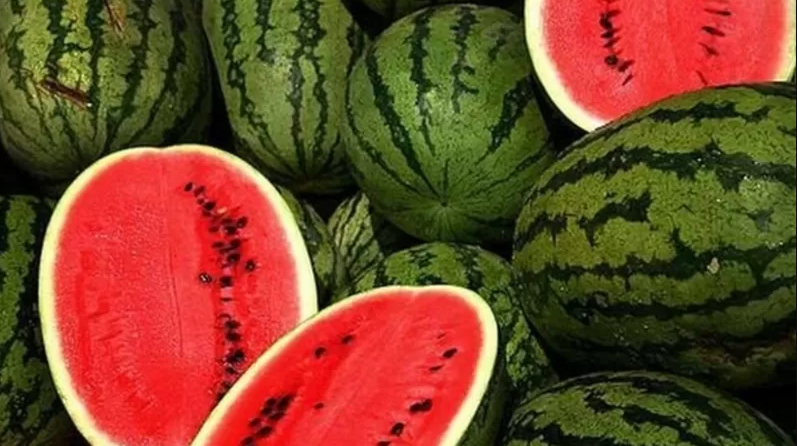
- Naturally ripened watermelon has a non-shiny outer surface, while chemically treated ones appear very shiny or uniformly green.
- The pulp of a natural watermelon is light red or pink, while chemically treated watermelons may have dark red pulp or white/yellow spots.
- Seeds of naturally ripened watermelons are black or dark brown; white or light-colored seeds suggest premature or chemical ripening.
- Placing a watermelon piece in water should not color the water; if the water turns pink/red, it indicates artificial coloring.