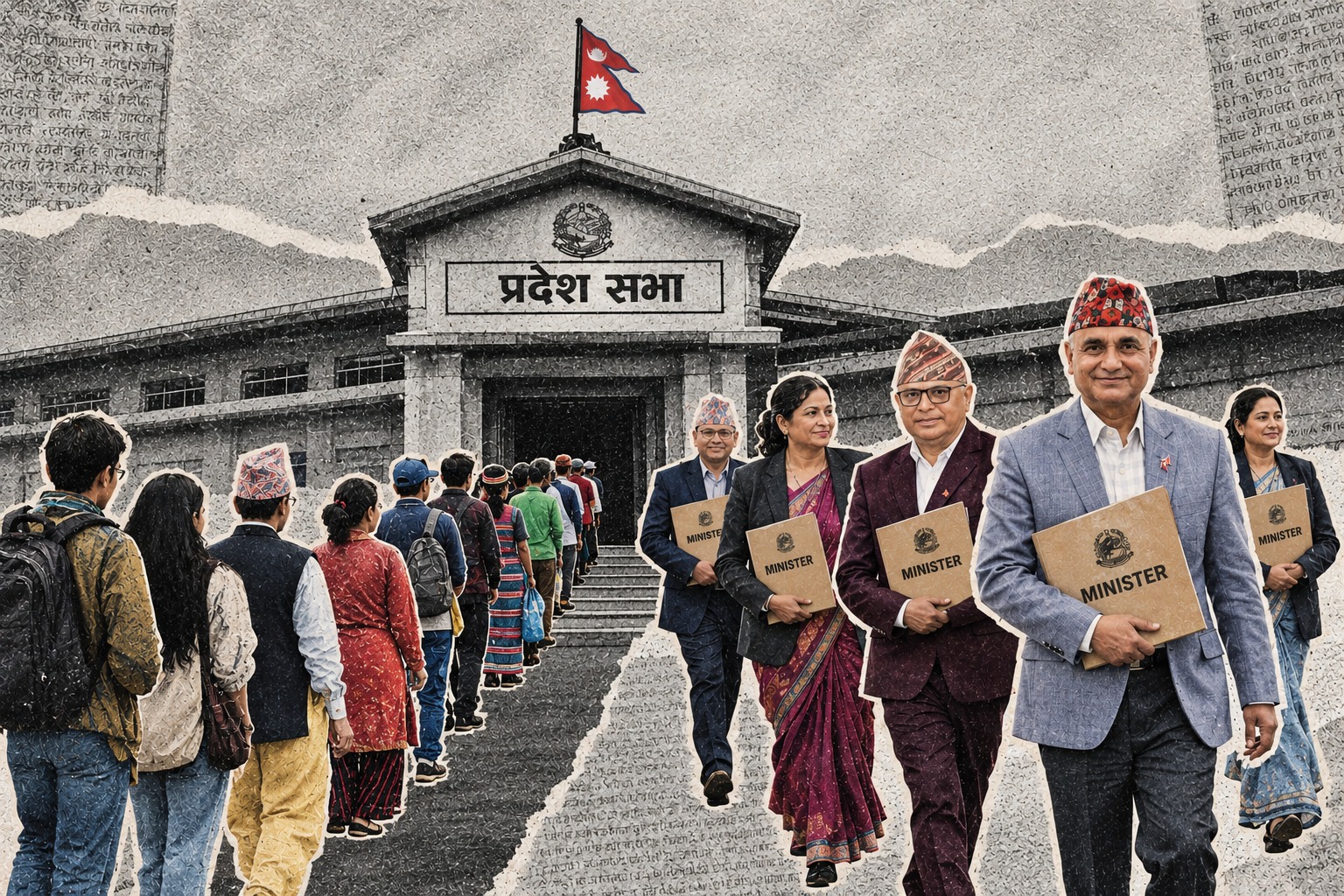
How Nepal’s provinces have become ‘factories’ for ministers
Summary
Nepal’s provincial governments have turned into revolving doors for ministers, with 301 of 550 lawmakers serving in Cabinet posts since 2023 amid shifting coalitions. The political churn has delayed budgets, stalled development projects and disrupted services such as free medicine supply in Sudurpaschim and unfinished infrastructure in Lumbini.
Key Points
- About 55 percent of Nepal’s provincial lawmakers have served as ministers or state ministers at least once since the current terms began in January 2023.
- Coalition shifts in Kathmandu repeatedly reshape provincial governments, turning Cabinet seats into bargaining chips and weakening legislative oversight.
- Budget delays and coalition infighting have disrupted services in Sudurpaschim, including shortages of free medicines at district hospitals.
- Several development projects in Lumbini and other provinces remain unfinished because successive governments have changed priorities and stopped funding.