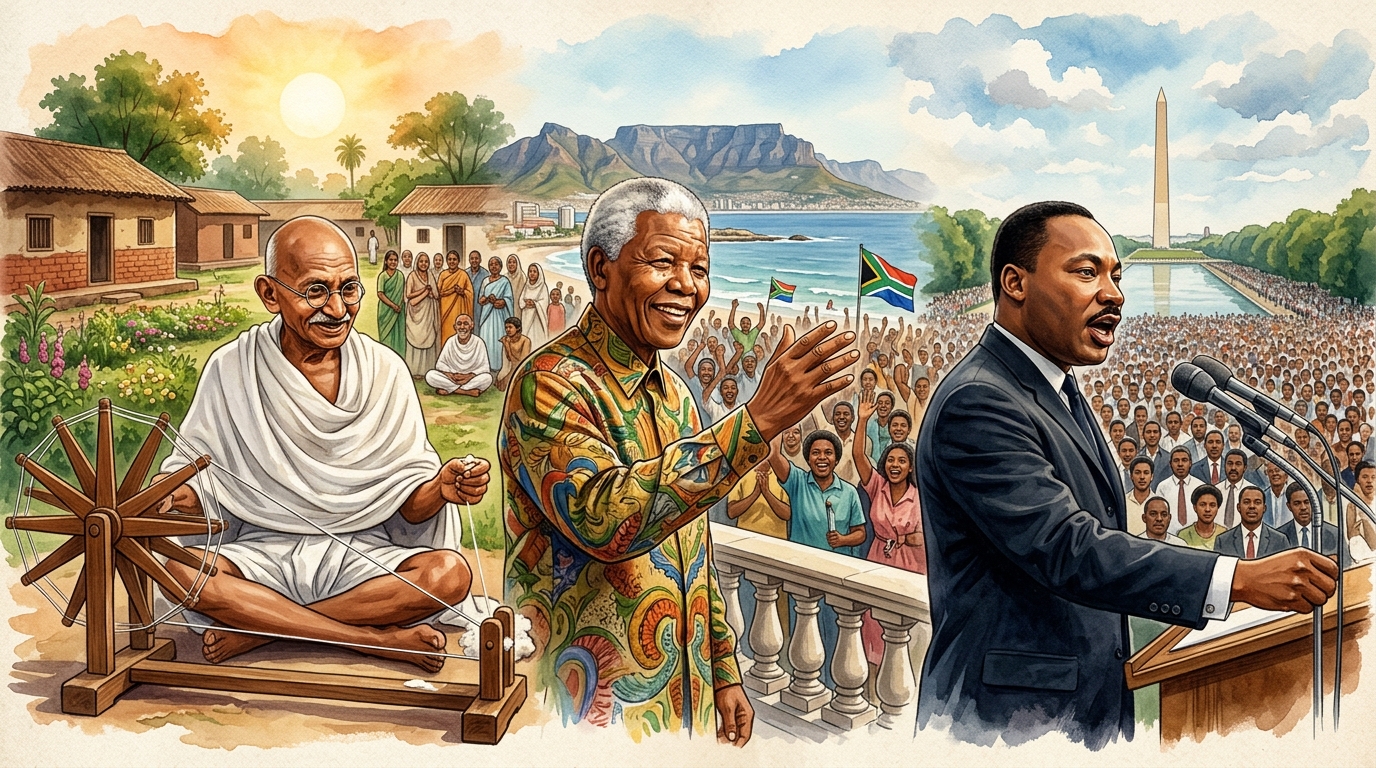
Non-violence: A prerequisite for peace, protection, freedom, and human dignity
Summary
The world marks the International Day of Non-Violence as a call to reject violence and defend peace, freedom, and human dignity. Drawing on Gandhi, Martin Luther King Jr., and Nelson Mandela, the article argues that non-violence remains essential amid war, climate change, terrorism, and rising global insecurity.
Key Points
- The article links the International Day of Non-Violence to Mahatma Gandhi’s legacy and the United Nations’ adoption of the observance on October 2.
- It argues that non-violence is a moral principle and practical tool that has shaped struggles from India’s independence movement to the U.S. civil rights movement and South Africa’s anti-apartheid movement.
- The article says today’s threats include weapons proliferation, war, climate change, poverty, conflict, and misinformation, all of which undermine human security.
- It concludes that peace, freedom, protection, and dignity depend on non-violent values in personal life, public policy, and international diplomacy.