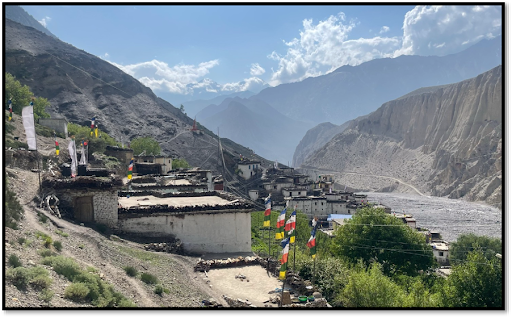
Opinion | What Lubra can teach Nepal about climate-induced migration and resettlement
Summary
Lubra, an 800-year-old Bon village in Mustang, shows that climate risk does not automatically force migration and that relocation can threaten identity, land rights and spiritual continuity. The article argues Nepal’s climate adaptation plans must account for culture, livelihoods and community ties, not just physical safety.
Key Points
- Lubra’s residents are facing warmer winters, less snowfall, shifting rainfall and increasingly frequent floods that have raised the riverbed and damaged homes and farmland.
- Despite these hazards, many residents are trying to adapt in place or move uphill while staying connected to the village through livelihoods, farming and community ties.
- The article argues that resettlement must consider land rights, customary systems, cultural and spiritual spaces, and social networks, not just safer ground.
- Lubra’s experience is presented as a lesson for Nepal’s broader climate-induced migration and relocation challenges.