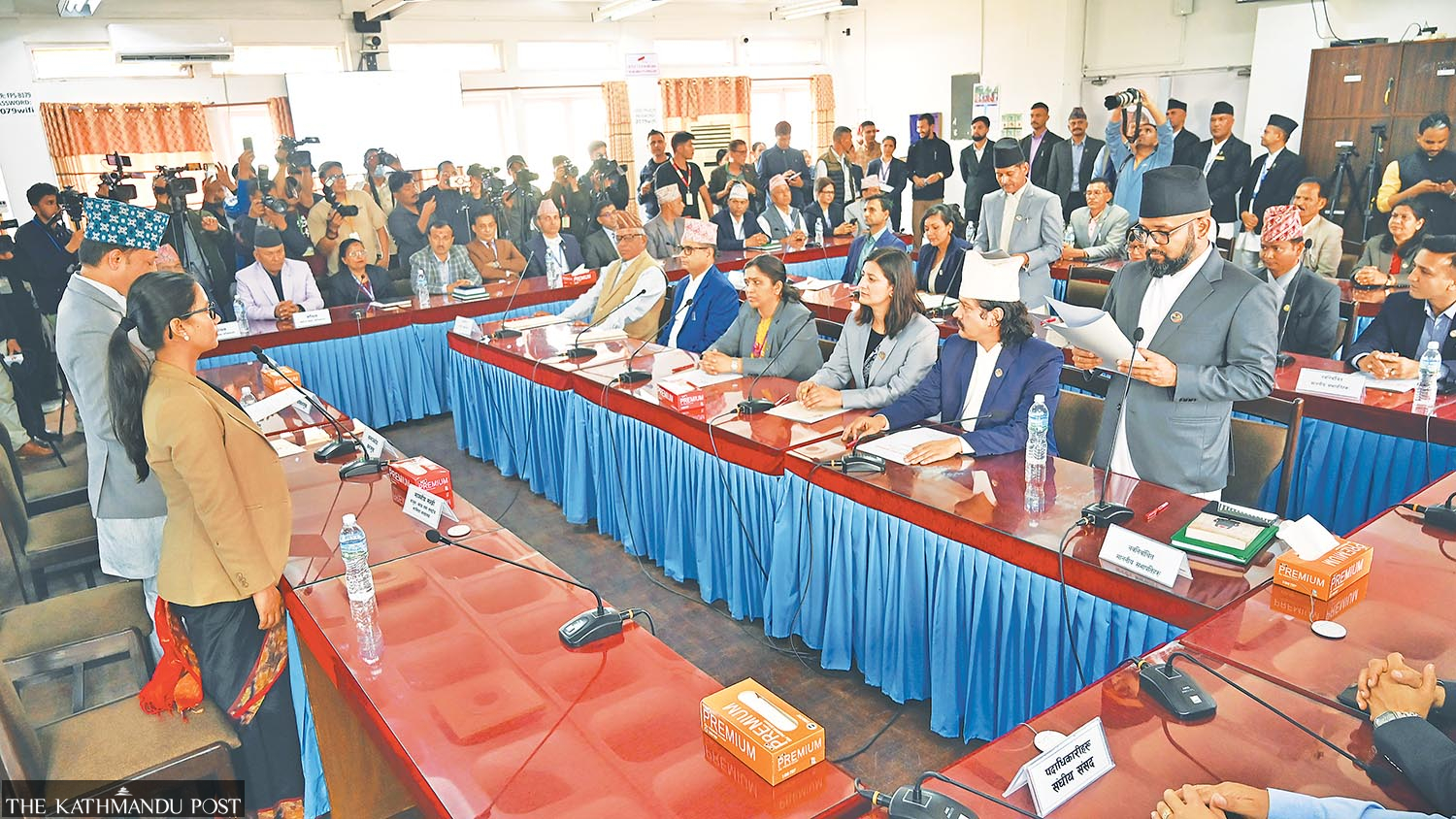
As crises mount, Nepal’s parliamentary committees struggle to hold the government to account
Summary
Nepal’s parliamentary committees are facing sharp criticism for failing to hold the government accountable amid rising crises, from alleged pressure on Supreme Court justices to shortages of fertiliser, public service disruptions, and protests. Critics say the committees have become passive and politically constrained, while their constitutional oversight role continues to weaken.
Key Points
- The Law, Justice and Human Rights Committee drew criticism after asking Amnesty International, the International Commission of Jurists, and Human Rights Watch to clarify their statement on alleged pressure on Supreme Court justices instead of probing the claims itself.
- The article says many standing committees in the House of Representatives are inactive or politically dominated, with the ruling Rastriya Swatantra Party chairing 11 of 12 committees.
- Public grievances have mounted over fertiliser shortages, evictions, press restrictions, passport delays, customs harassment, cooking gas shortages, and other administrative failures, yet parliamentary scrutiny has remained weak.
- Veteran journalist Hari Bahadur Thapa and lawmakers including Amaresh Kumar Singh and Bharat Bahadur Khadka argue that the committees have abandoned their core oversight mandate.