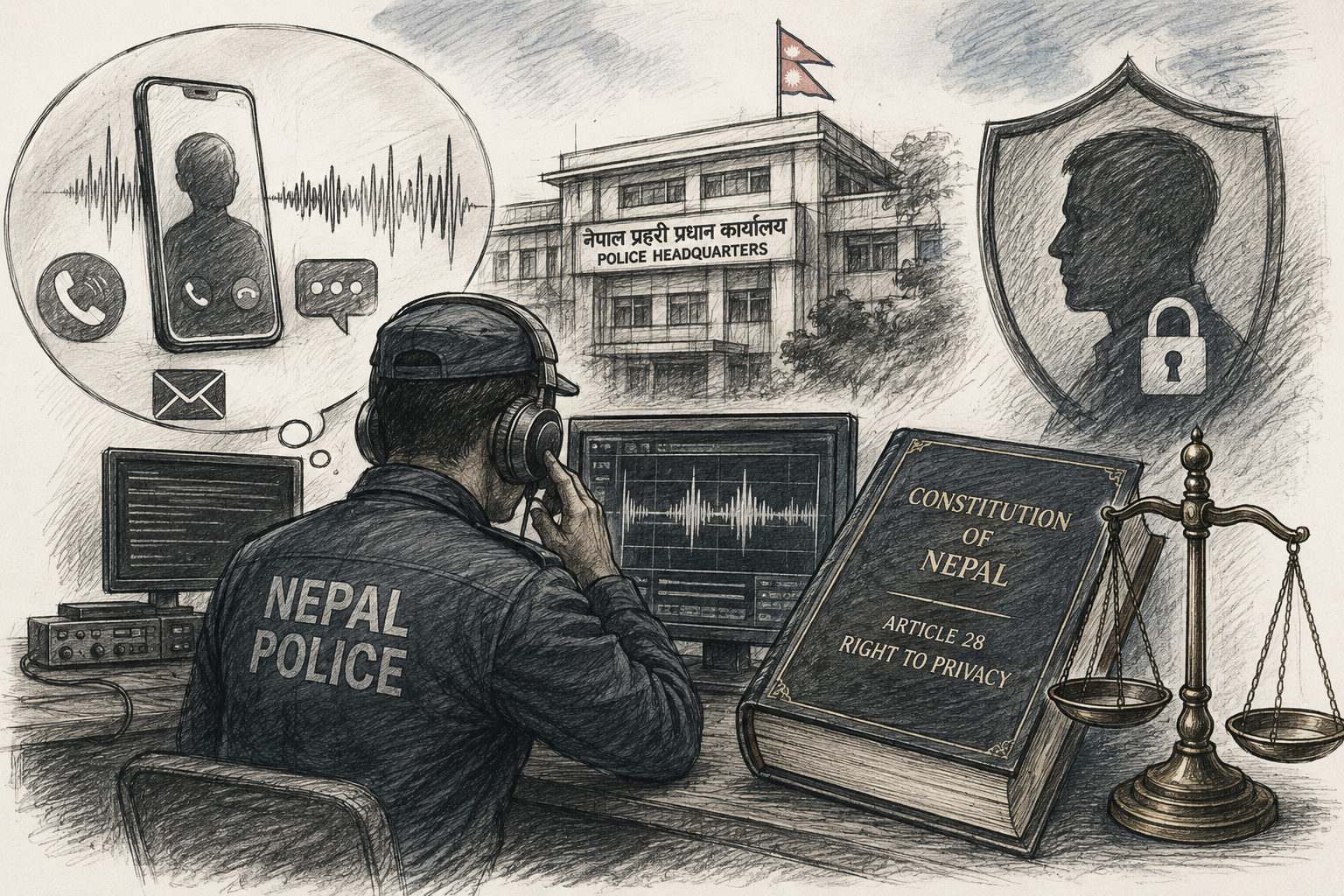
Nepal Police seeks call interception powers, reviving privacy and civil liberties concerns
Summary
Nepal Police has asked for legal authority to intercept phone calls and digital communications in real time during criminal investigations, triggering fresh concerns over privacy and civil liberties. Legal experts say any such power would need strict judicial oversight and narrow statutory limits to prevent abuse.
Key Points
- Nepal Police has proposed real-time interception powers for telephone and digital communications during serious criminal investigations.
- The proposal has revived concerns from lawyers and rights activists about privacy violations and possible political abuse.
- Legal experts say any interception law must include strict judicial approval, clear legal criteria and independent oversight.
- The debate follows earlier Supreme Court scrutiny of police access to call detail records and SMS data.