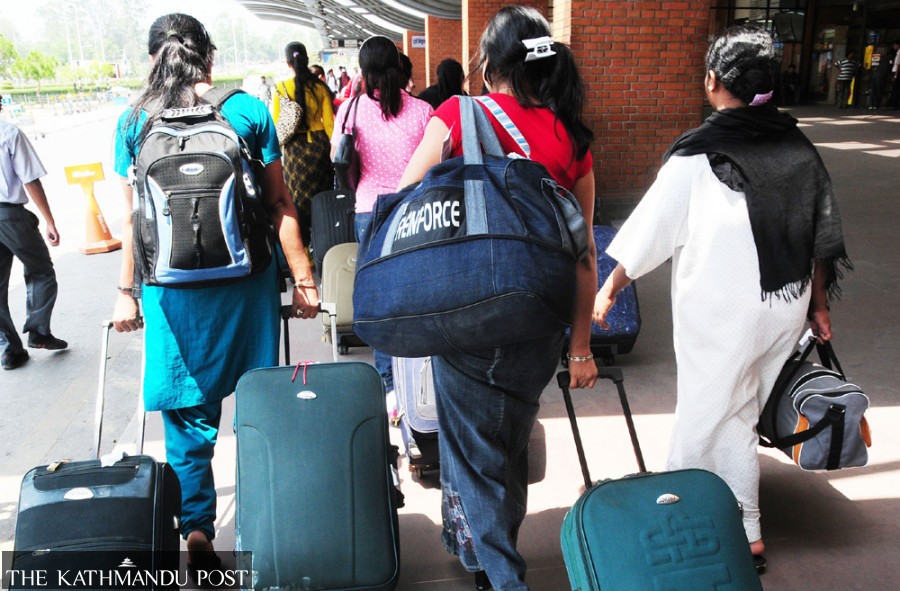
Financial constraints fueling informal women’s labour migration to Kuwait
Summary
Approximately 69,000 Nepali women work as domestic workers in Kuwait despite a government ban, highlighting the gap between Nepal's migration policy and economic realities. Financial pressure is driving many to use informal recruitment channels. Efforts to negotiate bilateral labour agreements with Kuwait continue amid challenges.
Key Points
- Nearly 69,000 Nepalis are employed as domestic workers in Kuwait despite the government ban on sending workers for such jobs.
- The government ban has pushed many aspiring workers towards informal recruitment channels due to economic hardship and lack of domestic opportunities.
- Efforts to negotiate a bilateral labour agreement with Kuwait, ensuring legal protections for domestic workers, are ongoing but face delays.
- The ban has inadvertently increased workers' vulnerability by limiting their access to social security, legal protection, and emergency assistance.