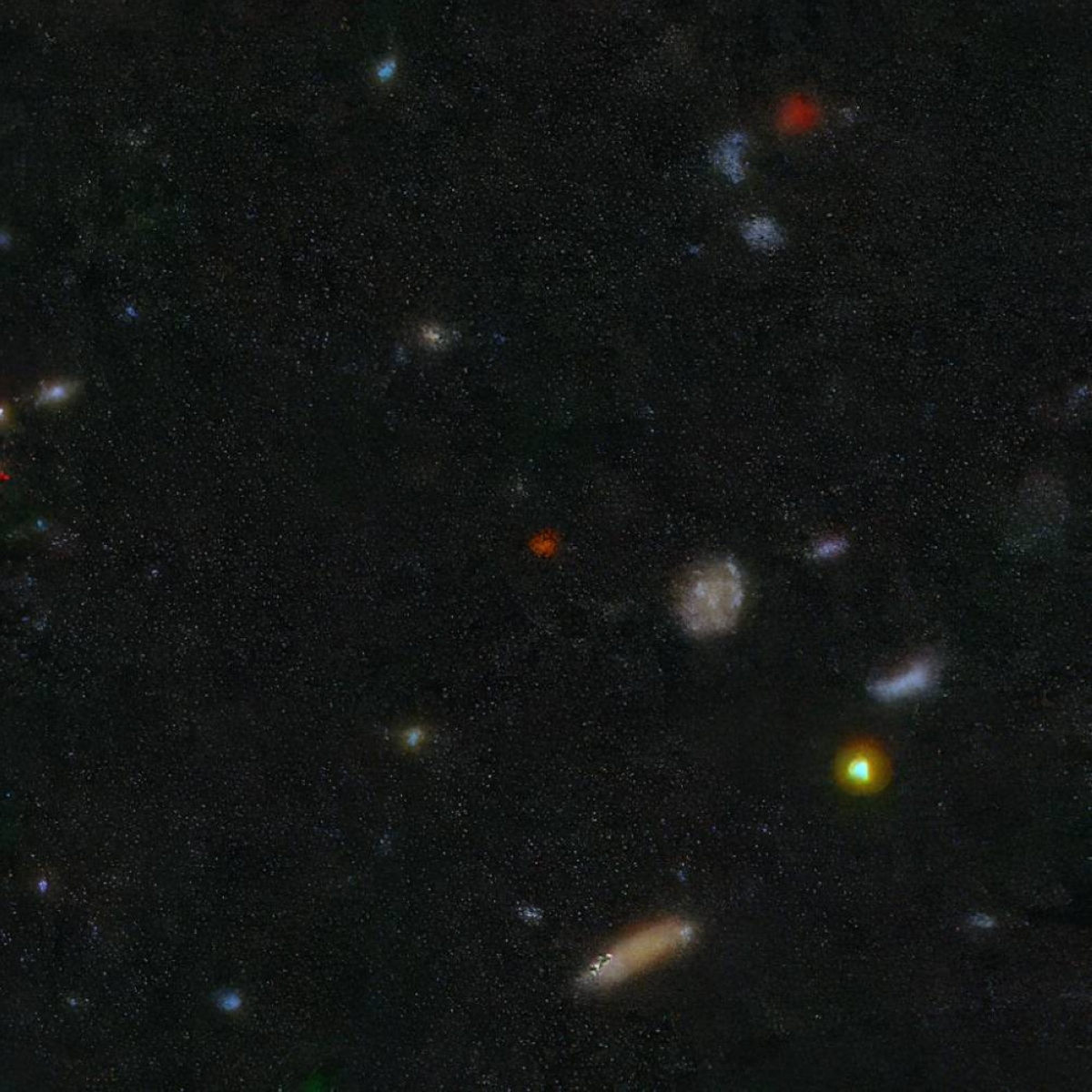
Scientists discover quasar formed within a mere 630 million years of the Big Bang, setting a record
Summary
Scientists have discovered the most distant quasar yet, formed just 630 million years after the Big Bang and powered by a black hole about 360 million times the mass of the sun. The find, nicknamed Dun Aonghasa, sets a new record for the early universe and was confirmed using Euclid, Hubble and Webb observations.
Key Points
- A German-led team discovered the most distant quasar ever seen, dating to 630 million years after the Big Bang.
- The quasar, nicknamed Dun Aonghasa, is powered by a black hole about 360 million times the mass of the sun.
- The discovery was made using observations from the European Space Agency's Euclid telescope and confirmed by Hubble and Webb.
- The findings appear in the journal Astronomy & Astrophysics.