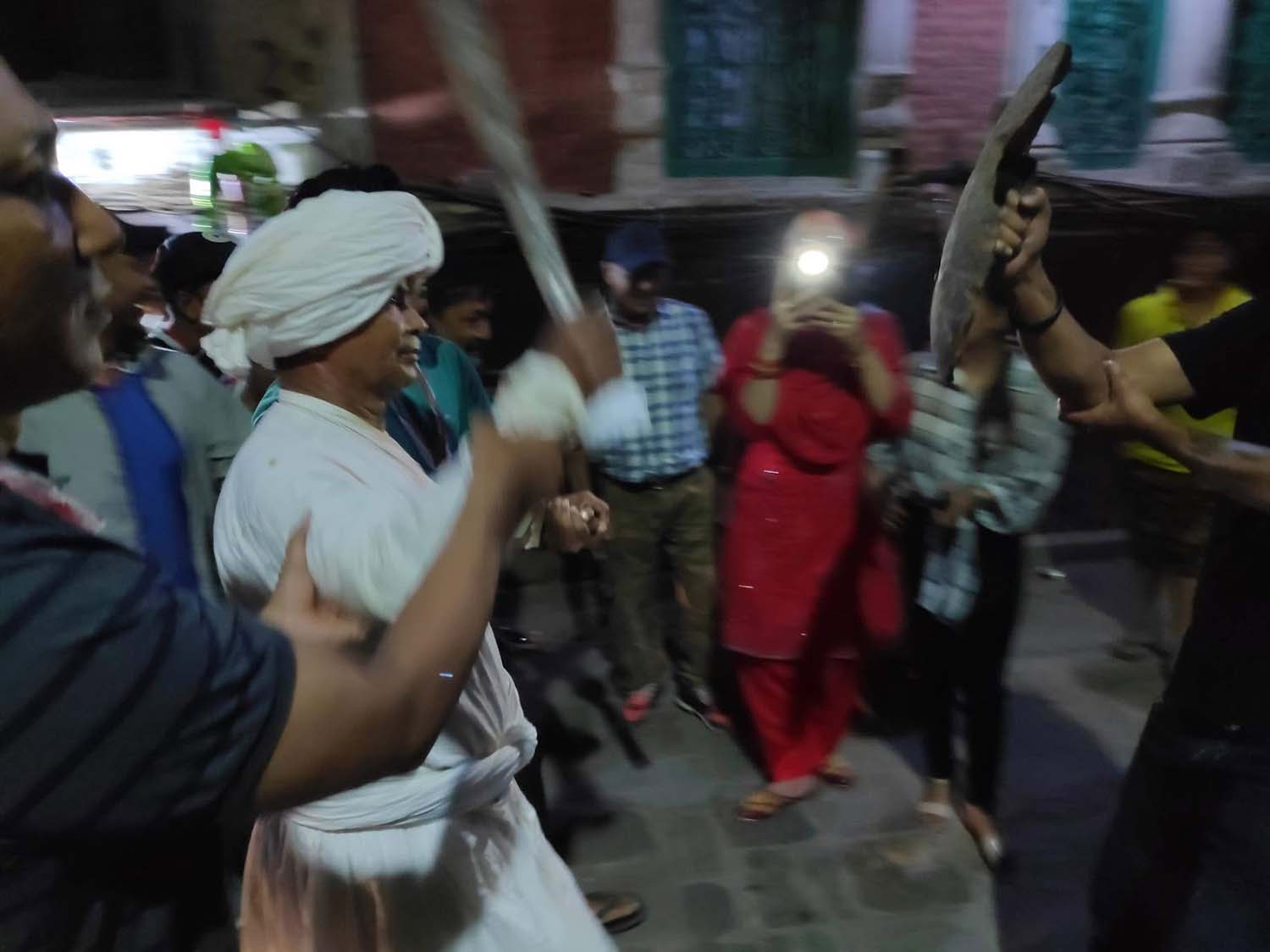
Pāyāḥ was once a tribute to Ajimā. What does the ritual mean today?
Summary
The Pāyāḥ ritual in Kathmandu Valley’s Newa communities has evolved from a tribute to Ajimā into a sword parade shaped by Hindu, Buddhist, and modern influences. The custom now reflects both cultural identity and concerns over the erosion of indigenous Newa traditions.
Key Points
- Pāyāḥ is a Newa sword ritual performed on the tenth day of Mohani, with roots in homage to the mother goddess Ajimā.
- The tradition has acquired later additions, including public processions and the cutting of ash gourd, sugarcane, or ginger, which the article says overshadow its original meaning.
- The ritual has been reinterpreted through Vedic and Buddhist lenses, linking it to Durgā, Mahishāsur, and Manjuśri.
- The article warns that encroachment, urbanization, and imported philosophies are threatening the indigenous Newa cultural system.