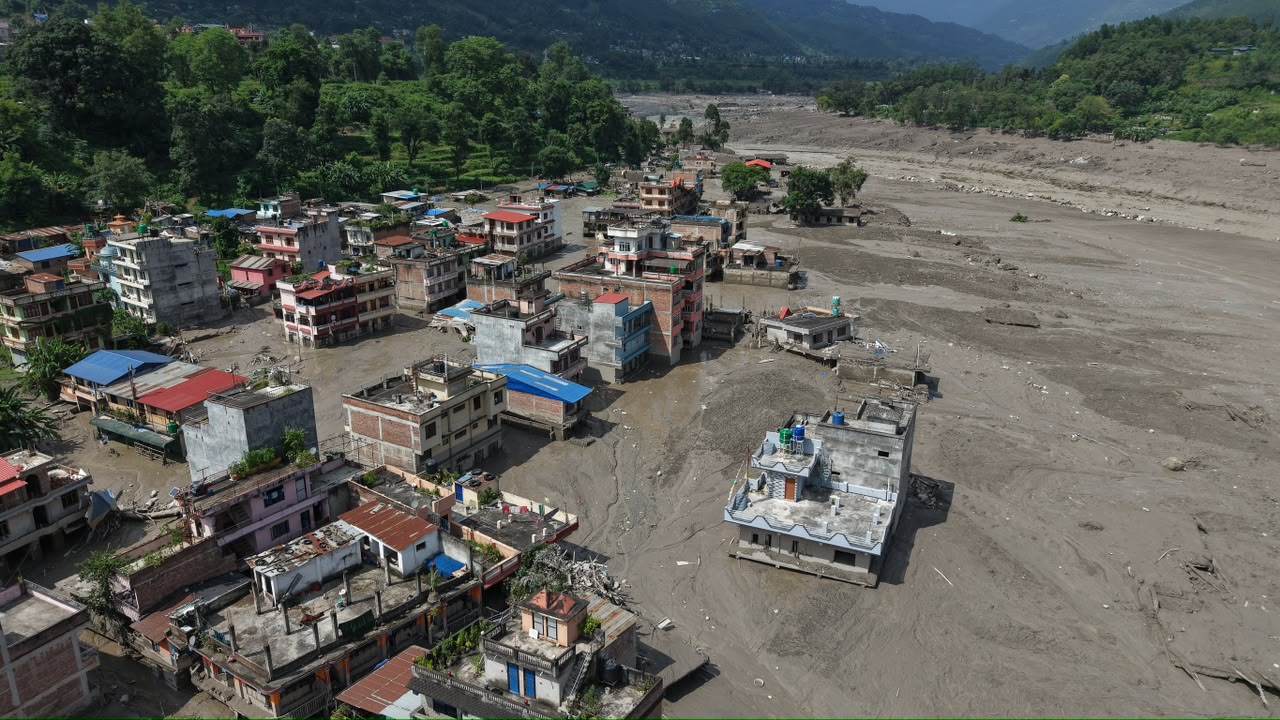
Climate change alone did not create the Bhotekoshi disaster
Summary
The Bhotekoshi-Trishuli corridor was devastated by a flash flood on August 26, killing and missing thousands and destroying settlements, roads, bridges, and hydropower infrastructure. The article argues that climate change is only one factor, and that governance failures, weak coordination, poor disaster preparedness, and inadequate transboundary water diplomacy also helped turn the hazard into a catastrophe.
Key Points
- A massive flash flood hit the Bhotekoshi-Trishuli corridor on August 26, leaving widespread destruction and thousands dead or missing.
- The article says climate change is part of the risk, but cannot explain the disaster by itself because human decisions shaped exposure and vulnerability.
- Nepal’s disaster response suffered from overlapping authority, unclear command structures, and weak operational coordination across levels of government.
- The piece calls for stronger transboundary water diplomacy, better science-policy links, improved disaster literacy, and more transformative infrastructure planning.