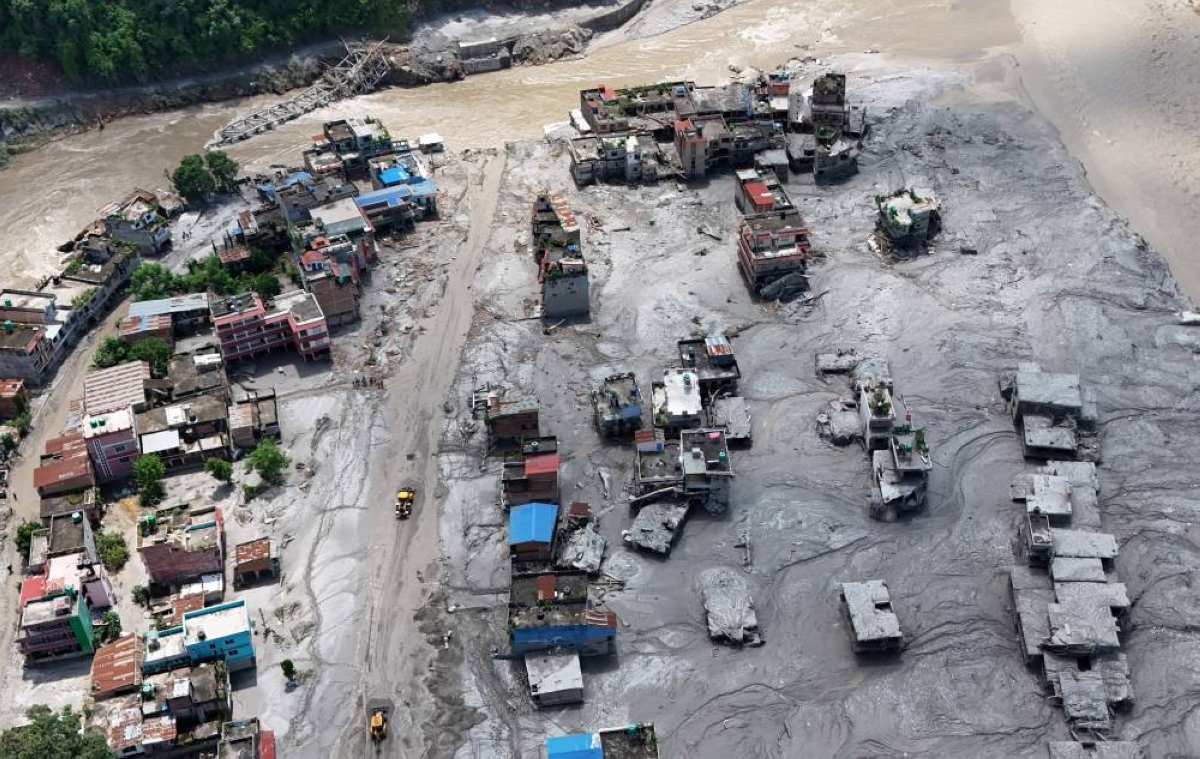
What the Rasuwa glacial flood reveals about Himalayan climate risks
Summary
The Rasuwa glacial flood in northern Nepal underscores how warming, permafrost thaw, and unstable mountain slopes are combining to create new Himalayan hazards. Scientists say the disaster shows Nepal must monitor not just large glacial lakes but also smaller, rapidly changing mountain systems.
Key Points
- The Rasuwa event was triggered by a rock-and-ice collapse in the Langtang region, not by an earthquake, and sent floodwaters into the Trishuli River.
- Scientists say rising temperatures and thawing permafrost are weakening Himalayan slopes and increasing the risk of catastrophic failures.
- The disaster highlights that Himalayan hazards go beyond glacial lake outburst floods and now include rock-ice avalanches and other cascading events.
- Researchers warn that Nepal needs stronger monitoring systems, including weather stations, permafrost tracking, and real-time satellite-based alerts.