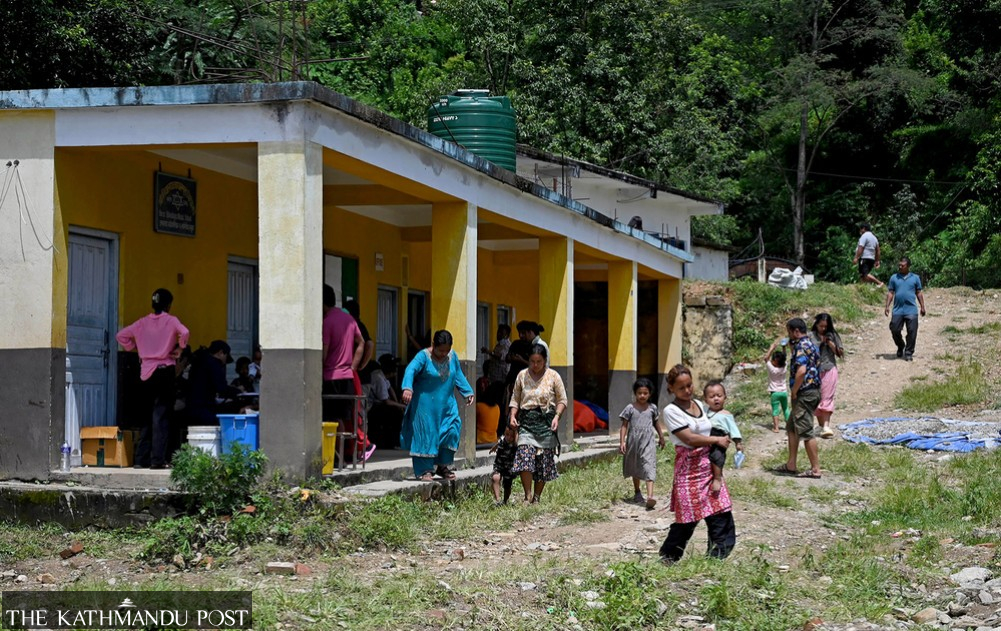
Flood survivors face water shortages, disease risk in crowded holding centres
Summary
Thousands of flood survivors in Rasuwa, Nuwakot and Dhading are living in crowded holding centres with unsafe water, poor sanitation and growing disease risks. Health officials say there is no outbreak yet, but children, chronic patients and displaced families are struggling to access care and clean drinking water.
Key Points
- More than 3,600 people displaced by the August 26 Bhotekoshi floods are staying in 37 holding centres across Rasuwa, Nuwakot and Dhading.
- Children in several shelters have developed fever, cough, vomiting and diarrhoea, but health officials say there is no sign of a major outbreak.
- Flood damage has disrupted roads, bridges and drinking water systems, leaving many displaced families without reliable access to hospitals or safe water.
- Authorities and aid agencies are supplying tankers, filters, chlorine and emergency health camps while monitoring the risk of waterborne disease.