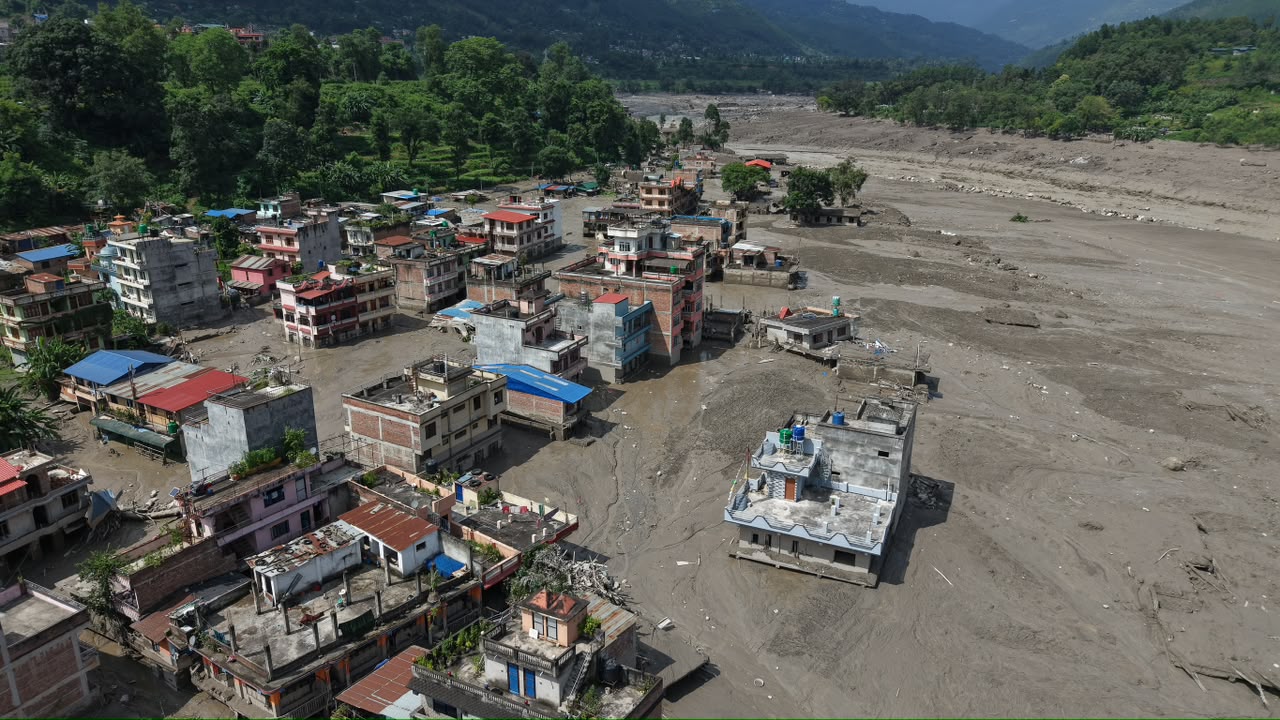
Opinion | Why Nepal’s infrastructure keeps getting devoured by rivers
Summary
Nepal’s infrastructure keeps collapsing because planners design for historical averages instead of extreme climate variance. The article calls for standard deviation-based engineering, stronger resilience metrics, and forecast-triggered disaster response.
Key Points
- A sudden surge in the Bhotekoshi riverbed in northern Rasuwa destroyed settlements, customs infrastructure, police posts, hydropower facilities, and bridges along a key trade route.
- The article argues that Nepal’s planning and engineering standards rely too heavily on mean rainfall and average river discharge, leaving structures vulnerable to extreme outlier events.
- It calls for legally banning average-based calculations for critical mountain infrastructure and replacing them with stress tests built around high-variance scenarios.
- It also urges the NDRRMA to shift funding from post-disaster cleanup to forecast-triggered preventive action.