Opinion | The case for Indigenous political thought
Summary
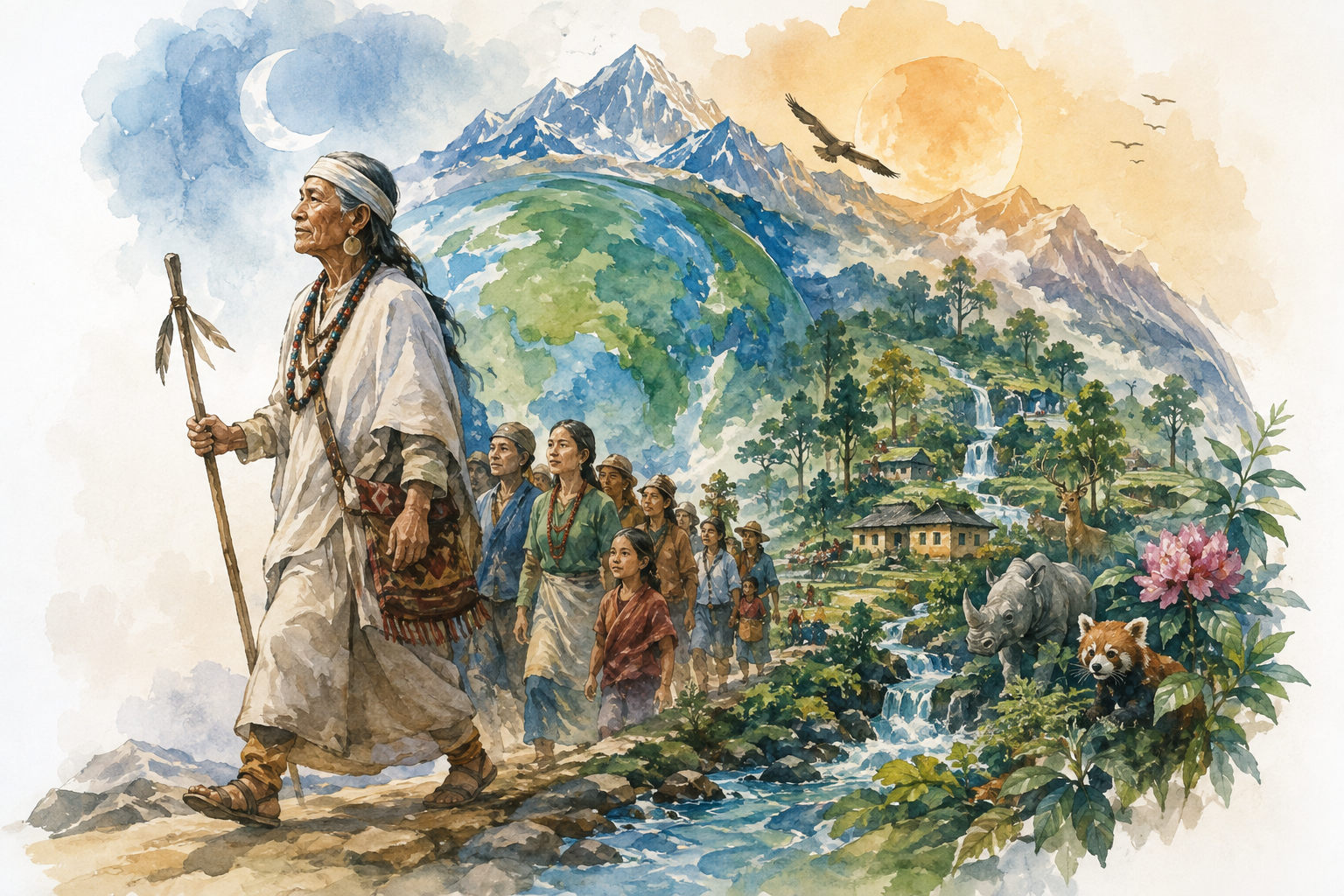
Nepal’s 31st Indigenous Peoples’ Day has renewed attention on Indigenous political thought as a framework for democracy, justice and climate action. The piece argues that Indigenous traditions offer vital insights on reciprocity, self-determination and living in balance with nature.
Key Points
- The article says the Mundhum and Limbu Indigenous ceremonies express a political philosophy rooted in reciprocity with Earth and the cosmos.
- It argues that Indigenous political thought can help Nepal rethink development, democracy and peace amid political and environmental crises.
- The piece highlights self-determination, legal pluralism, collectivity and spirituality as core features of Indigenous governance traditions.
- It cites António Guterres and the 2024 UN Biodiversity Conference as examples of global calls to respect Indigenous knowledge and restore harmony with nature.