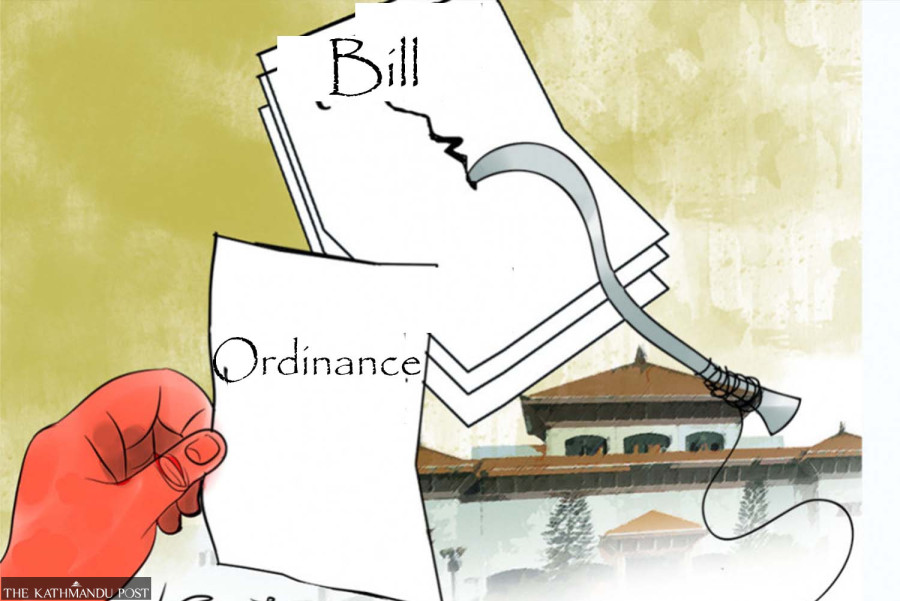
Ordinances’ longevity rests on opposition parties who dominate upper house
Summary
The fate of eight ordinances introduced by the Balendra Shah-led government depends on opposition parties in Nepal's National Assembly, where the ruling alliance lacks representation. Approval from both houses is mandatory within 60 days or ordinances become void.
Key Points
- The eight ordinances introduced by the Balendra Shah government require endorsement by both houses of Nepal's federal parliament to remain in force.
- The ruling Rastriya Swatantra Party has a majority in the lower house but no representation in the National Assembly, where opposition parties dominate.
- The National Assembly can nullify ordinances by majority vote and has provisions allowing rejection notices within two days of tabling.
- Opposition parties, including the Nepali Congress and UML, are deliberating a unified position, with signals leaning towards rejecting some ordinances they view as unconstitutional or politically motivated.