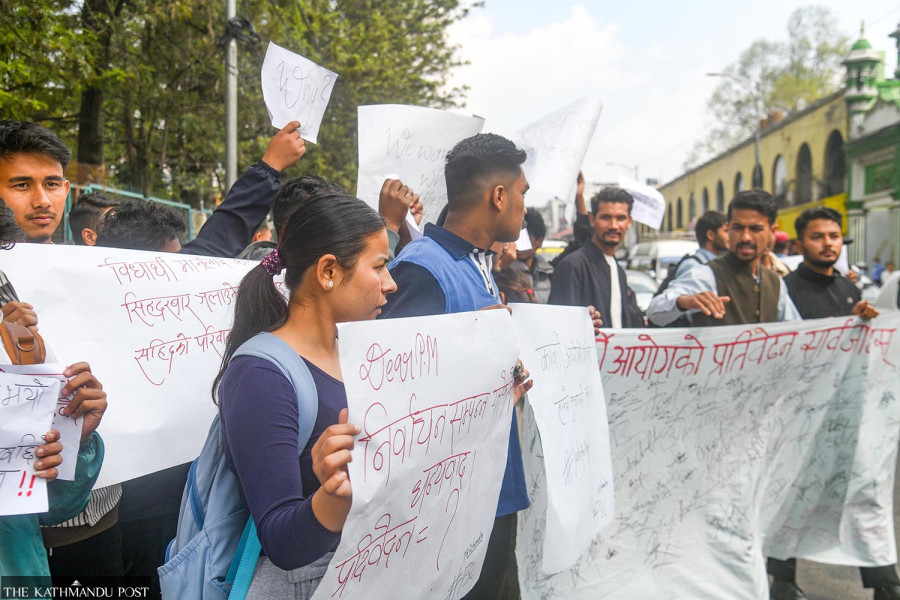
Editorial | No more betrayal
Summary
The incoming Balendra Shah government in Nepal faces high expectations to resolve the stalled transitional justice process for victims of the Maoist insurgency, which has remained unresolved for nearly two decades.
Key Points
- The Comprehensive Peace Accord of 2006 promised to reveal the identity of disappeared and killed victims within 60 days and form a transitional justice mechanism within six months, but nearly 20 years later, justice remains elusive.
- Two commissions, the Truth and Reconciliation Commission (TRC) and Commission of Investigation on Enforced Disappeared Persons (CIEDP), established over 11 years ago, have largely failed to deliver tangible results.
- Successive Nepalese governments and political parties, including Nepali Congress, CPN (Maoist Centre), and CPN-UML, have hindered the transitional justice process for political reasons.
- The newly-formed government led by Balendra Shah, without ties to the insurgency, is urged to provide clear vision, necessary legal tools, and resources to expedite justice for conflict victims.