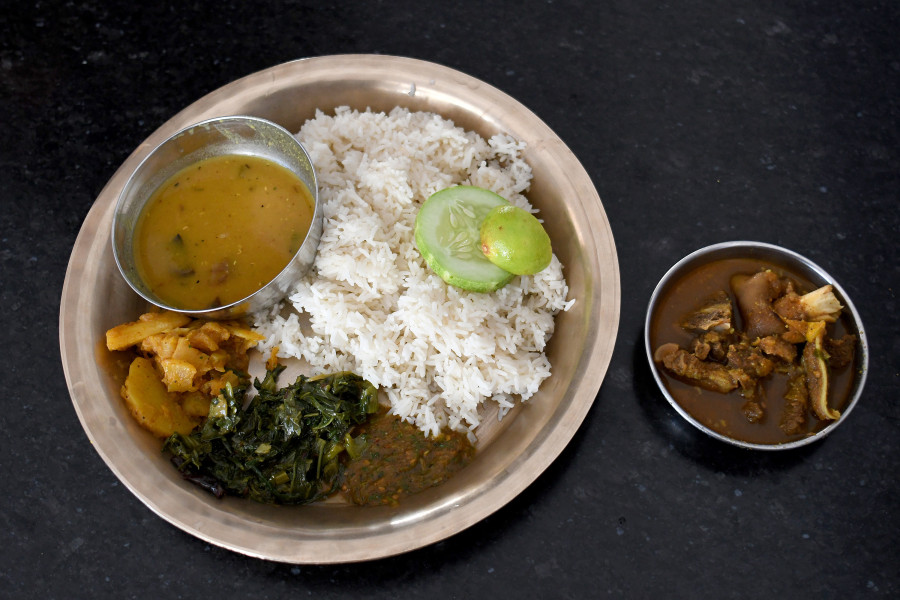
Opinion | No more ‘masu bhat’
Summary
Nepal's longstanding political tradition of offering 'masu bhat' (meat and rice) during elections, once a symbol of prosperity, is increasingly viewed negatively and may be declining as political awareness grows.
Key Points
- The practice of offering 'masu bhat' (meat and rice) during elections has been a long-standing political strategy in Nepal since the Panchayat era.
- This tradition originated during times of food scarcity when meat and rice were rare and coveted.
- Political parties have historically used 'masu bhat' feasts to mobilize voters and cadres during campaigns.
- Recently, there is growing public disapproval and campaigns against the 'masu bhat' culture, associating it with corruption and outdated practices.