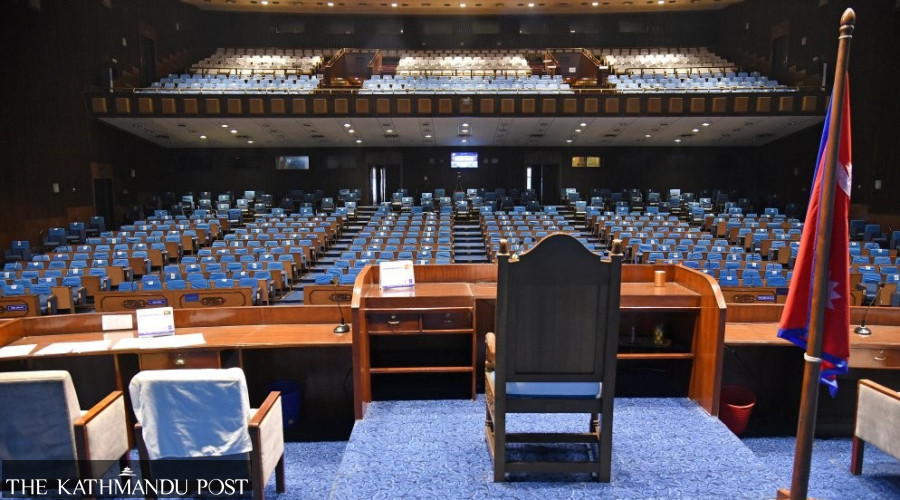
What can—and cannot—be achieved with a two-thirds majority
Summary
Nepal's parliamentary two-thirds majority enables significant legislative powers and government stability, but constitutional amendments and impeachments require a supermajority in both houses.
Key Points
- A two-thirds majority in Nepal's House of Representatives enables stronger disciplinary and judicial powers and facilitates smoother lawmaking.
- Constitutional amendments require a two-thirds majority in both the House of Representatives and National Assembly, with some core principles unamendable.
- A simple majority of 138 seats suffices to form a government, pass budgets, and fast-track bills despite National Assembly rejection.
- Two-thirds majority governments can weaken the opposition, possibly reducing accountability, while simple majority governments maintain stronger opposition presence.