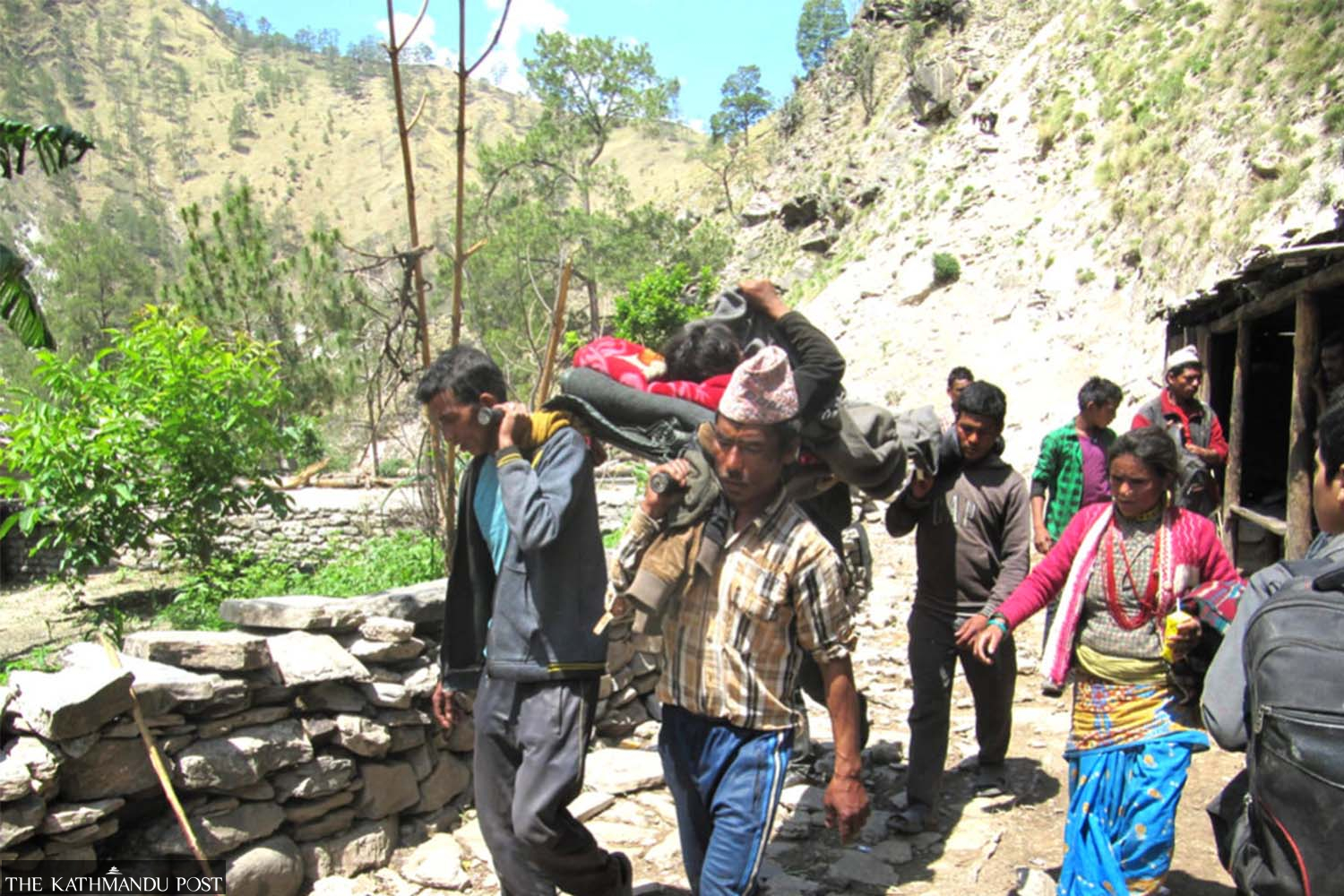
Karnali’s maternal health crisis deepens amid staff shortages and crumbling access
Summary
Karnali Province faces a deepening maternal health crisis marked by staff shortages, inaccessible health facilities, high maternal and neonatal mortality rates, and insufficient medical infrastructure.
Key Points
- Over nine years, 172 women have died in Karnali due to inaccessible or delayed maternal care, with most being young mothers aged 15 to 25.
- Karnali Province suffers significant shortages of doctors and specialists, with only 32 permanent doctors filled out of 184 sanctioned posts.
- Remote villages require hours-long treks to health facilities, causing many mothers to give birth en route or at home, escalating risks and deaths.
- Despite significant investments in ICU beds and ventilators during the pandemic, many remain unused due to lack of trained staff and medicine.
- Home births and reliance on traditional healers remain common, contributing to higher maternal and neonatal mortality rates.
- Healthcare access remains severely limited, with only 72 percent of pregnant women delivering in health facilities, compared to 79 percent nationally.
- Repeated election promises have failed to improve healthcare infrastructure, staffing, and access in Karnali province for years.