Opinion | Cult over content
Summary
Balendra Shah of the Rastriya Swatantra Party adopts a low-key campaign strategy focusing on personality over formal manifestos, contrasting with traditional party agendas ahead of Nepal's March 5 elections.
Key Points
- Balendra Shah’s campaign strategy hinges on a ‘speak less, do more’ approach, focusing on his personality cult rather than a detailed party manifesto.
- The Rastriya Swatantra Party plans to publish a contract-based agenda promising delivery over doctrines, differing from traditional manifestos.
- Mainstream parties like CPN-UML, Nepali Congress, and Nepal Communist Party continue to present formal, often jargon-heavy manifestos outlining economic and socialist priorities.
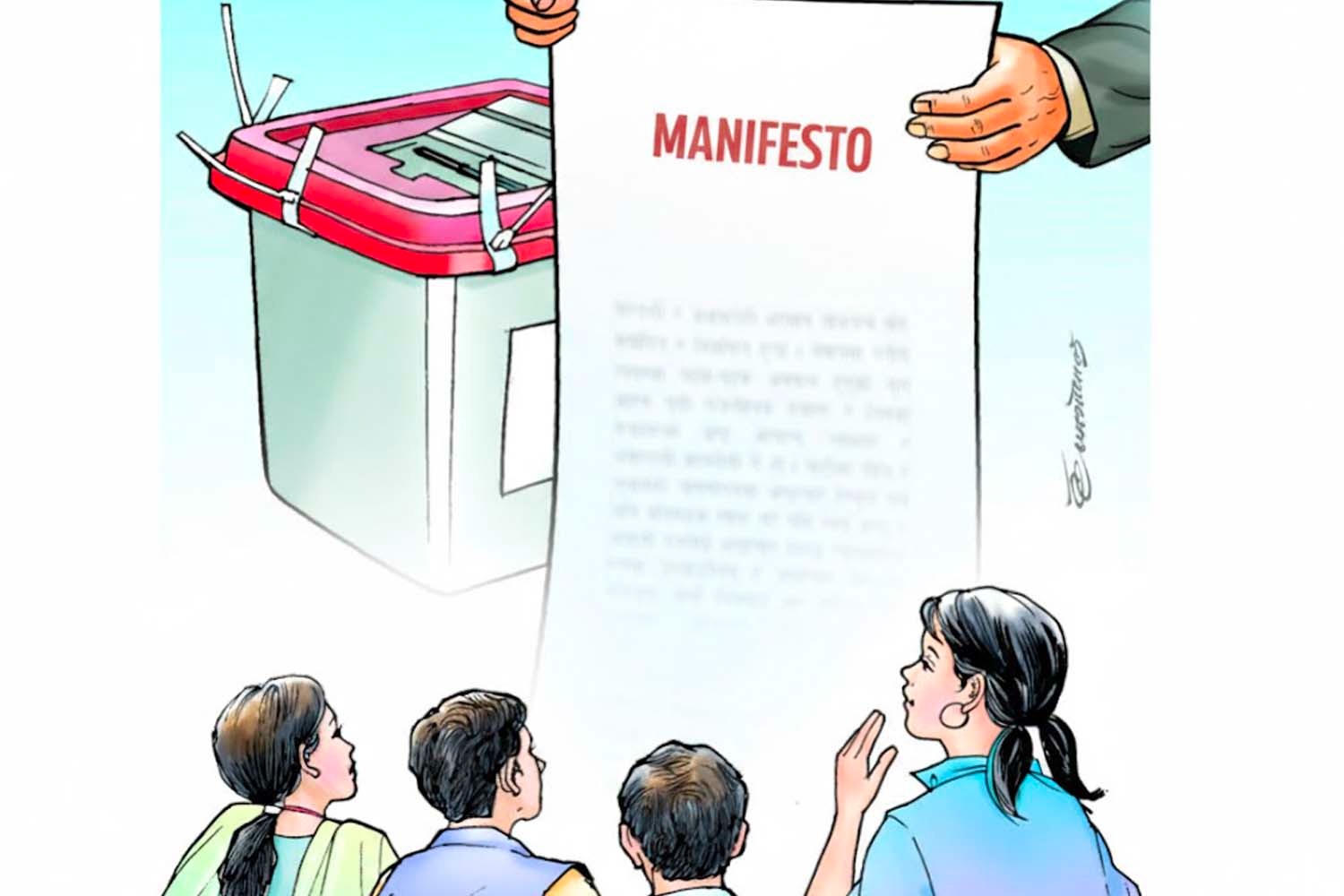
- Despite formal manifestos, elections are expected to hinge more on leaders’ personalities than party promises, reflecting voter distrust in political commitments.
- Election manifestos serve as official documents that can hold parties accountable and highlight neglected public agendas, playing a crucial role before and after elections.